

“Forest arguably knows more about the issues facing Cape Cod today than any candidate running for local or regional office.”
Welcome to my Website!
I want to thank you for visiting my web site. It is an honor to represent the people of Cape Cod as County Commissioner.
As you know, this is a critical time for Cape Cod. When I was first elected, we were in the grips of a global pandemic that was crippling our national and local economy. The crisis exposed serious weaknesses in our health care system that put lives at risk.
During this crisis, the federal and state government - in typical fashion - shifted much of the burden to local communities. Not only that, but state officials also insisted that Cape Codders drive all the way up to Boston, Fenway Park and Gillette Stadium to get vaccinated.
Here on Cape Cod, we decided to take a different approach. We banded together, and we fought for – and secured - our own stock of vaccines. We set up our own clinics, close to home, all around the Cape. They were staffed with local and county personnel, and even our own well-trained volunteers. We organized transportation services and staffed a hotline with nurses - to provide critical information to those most in need.
This is one small example of how we pulled together, stepped up and delivered. We take this very same approach with other challenges too, like investing in clean water and programs to protect our water supplies and public health.
At my insistence, we fought plans to build a machine gun range in the Upper Cape Water Supply Reserve - the largest source of drinking water on Cape Cod. A project like this would never be allowed in the Quabbin Reservoir watershed - and it makes no sense in Cape Cod’s major watershed.
We secured federal and state resources to help our towns make new sewer and wastewater investments. We organized meetings with state officials to boost the longevity of the Cape and Islands Water Protection Fund.
We created a new “Aquifund” - with millions of state dollars - to finance septic system upgrades and sewer connections for homeowners. We even made investments in our county water testing laboratory to help homeowners protect their own drinking water wells and to assist towns and local water districts deal with emerging contaminants, like “PFAS”.
As Commissioners, we were on the phone to our legislators in Washington DC advocating for federal funds to replace the Bourne and Sagamore Bridges.
We met with our Governor and stressed the urgency of getting these projects moving - to start the design and the environmental review process right away and to set aside state matching funds right away to leverage federal funding.
Today, all the funding for the new Sagamore Bridge is in place, and we are working to secure funds for the Bourne Bridge.
As Commissioners, we also worked on several long term issues, like making the Cape eligible for state and federal broadband expansion funds; laying the groundwork to respond to the crisis of climate change; creating a region-wide affordable housing game plan; while promoting investments in the arts, cultural and heritage tourism.
Regarding the county’s finances - we pledged on day one to set the highest standards. We adopted “best practices” and made them county policy.
We held the line on spending, limited new hiring, and have pinched every penny. We have wisely invested our reserves and managed surpluses, tightened up all the county’s financial policies, and improved our operational and capital budgeting procedures. These efforts have resulted in praise from our colleagues around the Commonwealth and led to an important boost in our bond rating from Standard and Poor.
Another priority has been to keep the residents of Cape Cod better informed on our work in the county. We have expanded our communications program with a new web site, a monthly newsletter and regular news updates on social media.
With most Cape Codders living paycheck to paycheck, we are always looking for ways we can ease the burden on local taxpayers and residents.
While I don't have all the answers, I do know how to listen, how to be creative and build consensus from different segments of the community in order to get things done.
As a former town manager on Cape Cod, an aide to two Congressmen and a teacher, I have had some practice at it. Cape Cod is full of energy and talent.
We are blessed with positive, creative leaders in virtually every segment of our community. We clearly have all the ingredients for success.
We have so much work to do, and that is why I ask for your support, your ideas and suggestions on how we can better serve you.
Thank you.
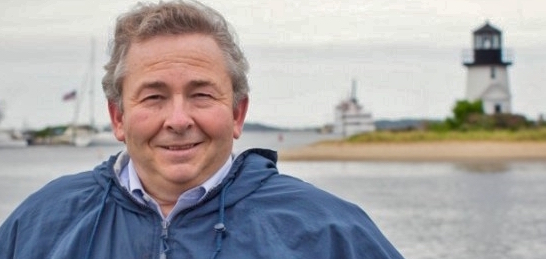
Mark Forest: Background and Community Service

Mark Forest is a Barnstable County Commissioner and a member of the Yarmouth Select Board. He is also President of the Cape and Islands Municipal Leaders Association.
Forest is an Adjunct Professor of Government and International Relations at Cape Cod Community College. He also coordinates Suffolk University’s Master’s in Public Administration (MPA) Program on Cape Cod and frequently teaches public administration courses to graduate-level students at the university.
As a County Commissioner, he serves on the Metropolitan Planning Organization (MPO), the regional transportation policy-setting board. The MPO sets regional transportation funding priorities for Cape Cod.
He also serves as the Chairman of the Cape Cod Conservation District, which provides funding for ecological restoration projects on Cape Cod. The District has provided roughly $100 million in funds to restore coastal habitats and wetlands throughout the entire Cape Cod region.
He was recently appointed by the Governor to serve on the Community Advisory Council, which oversees the management of the Upper Cape Water Supply Reserve. The Reserve consists of 15,000 acres of state-owned land (within the boundaries of Joint Base Cape Cod) that serves as the primary source of Cape Cod’s drinking water supplies.
His professional career started in 1981 in the Provincetown Town Manager’s office, where he served as the Acting Town Manager and Assistant Town Manager. In Provincetown, he coordinated the planning and funding for the redevelopment of MacMillan Wharf and secured funds for several projects. These included grants to upgrade the town’s aging water system, funding to clean up groundwater contamination threatening the town’s water supplies, a community housing rehabilitation, and community development projects. While in Provincetown, he was appointed by the Select Board to represent the town on several county boards, including the Cape Cod Regional Transit Authority, the Cape Cod Planning and Economic Development Commission, and the Barnstable County Finance Advisory Board.
In 1985, Forest joined the staff of Congressman Gerry E. Studds and worked closely with the Congressman on the designation of Stellwagen Bank National Marine Sanctuary, the creation of the Waquoit Bay National Estuarine Research Reserve, and the Mashpee National Wildlife Refuge. Forest was known primarily for his work in helping secure full funding for the cleanup of groundwater pollution emanating from the Massachusetts Military Reservation (MMR) and the restoration of local drinking water supplies.
He worked with Barnstable County officials to secure federal approval of Barnstable County’s innovative HOME consortium, which provides affordable housing funds to Cape Cod. Following the 1990 Census, he helped establish a new Barnstable-Yarmouth HUD entitlement designation, bringing an annual allocation of community development block grant funds to the Mid-Cape.
In 1992, he co-founded the Community Development Partnership, a community development corporation serving the Lower Cape that is headquartered in Orleans.
Forest also served as a liaison to the Cape Cod National Seashore Advisory Commission, county and municipal governments in the district, and the fishing industry.
In 1997, following the retirement of Gerry Studds, Forest joined the staff of Congressman Bill Delahunt. With Delahunt, he performed a similar role, supervising district operations and constituent services while helping local towns secure federal and state funds for local projects. He also continued working on the cleanup of pollution emanating from Joint Base Cape Cod, a project that has secured well over $1.5 billion in funding.
With Delahunt, Forest secured federal approval of the MMR Alternative Septic System Test Center and assisted in the drafting of the 15,000-acre Upper Cape Cod Water Supply Reserve—the largest land conservation project since the establishment of the Cape Cod National Seashore—and the creation of the Upper Cape Water Supply District.
With Delahunt, he also played an active role in creating a long-term master plan for Joint Base Cape Cod and helped steer funds to Cape Cod for numerous open space land acquisitions.
Forest was tasked by Delahunt to work with local veterans’ groups to establish a primary healthcare clinic in Hyannis. He co-chaired the Cape Cod Public Transit Task Force that expanded public transportation on Cape Cod, providing funding for several transportation projects such as the “Flex Bus” shuttle service on the Lower Cape, and numerous bike trail projects in Yarmouth and Falmouth, including the Shining Sea Bikeway and the Cape Cod Rail Trail.
In 2005, at the request of local leaders, Forest served as Chairman of the “Save Otis” Coalition, which helped prevent the Otis Air National Guard Base and Coast Guard Air Station on Cape Cod from being closed during the 2005 round of military base closures.
Following the success in saving the local military base, Forest became Delahunt’s Chief of Staff, working out of Washington, D.C. During this time, he was the Congressman’s principal policy advisor, speechwriter, legislative director, and communications director.
He drafted legislative initiatives in clean energy, offshore wind, and marine policy, including legislation authorizing United States participation in the International Renewable Energy Agency. He drafted legislation to ease the transfer of closed military bases to local communities for economic development purposes, worked on the initial legislation creating the Consumer Financial Protection Bureau, and secured funds to establish the Marine Renewable Energy Center, which helps marine companies and researchers test ocean-based clean energy technology.
Forest has received several honors for his public service, including the New England Federal Executive Board’s John Joseph Moakley Award for Exemplary Public Service.
He has been recognized by the Massachusetts Lobstermen’s Association for his work on behalf of the fishing industry and by the Association to Preserve Cape Cod for his work to protect the Cape’s environment.
He is a long-time resident of South Yarmouth, Massachusetts, where he and his wife, Carol, live and have raised their family.
Mark Forest received a bachelor’s degree in political science from the University of Massachusetts Boston in 1978. He obtained a master’s degree in public administration (MPA) from Suffolk University in 1981. His studies concentrated on local government management, planning, finance, and economic development.
In 1977, Forest became a National Service “VISTA” volunteer, serving in Boston during the height of the desegregation controversy and assisting students in gaining access to public education services.
Link to Mark Forest’s Biography
Contact Mark Forest. A Leader Who Listens.
Having an open conversation with you, the residents of Yarmouth, is important to keeping our community moving forward. Mark would like to hear from you, and learn more about the issues that are important to you.